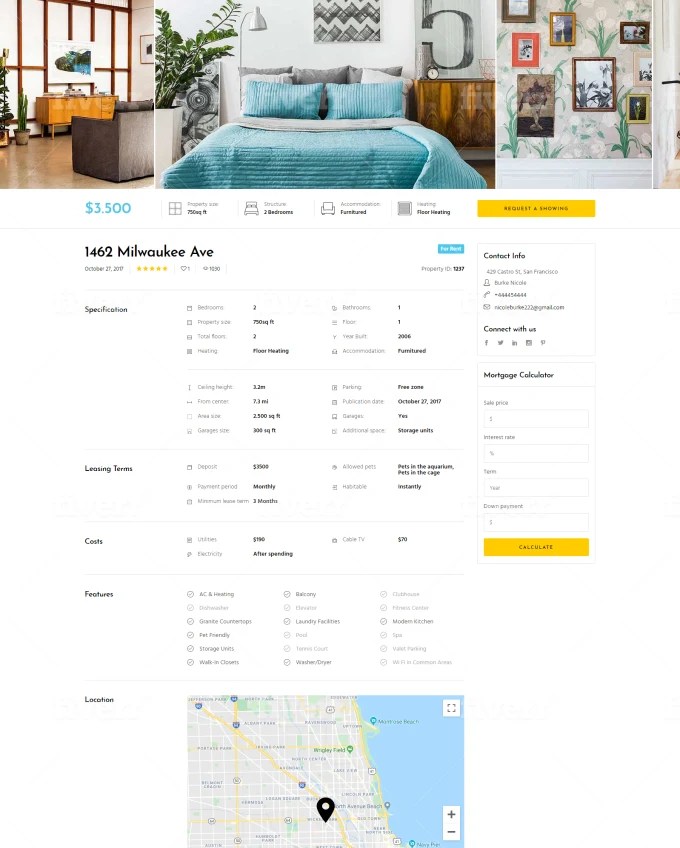
When real estate websites hold the position of some of the most impressive, innovative and prestigious websites online, they can also hold the standing for the ugliest and least intuitive sites as well.
Zillow is a great example of a new media giant. What started out being a highly secretive startup by the ex CEO of Expedia turned into one of the most talked about sites of the year. It has been branded by the public the “EBay of real estate sites”. Their site technology has resulted in many industry innovations since fact is changing the real estate industry as we know it.
Redfin as well as Trulia are another two up and comers on the real estate technology arena. Redfin has already dominated a 1 hr show recently and Trulia has just received another twelve million in financing. In fact in January 2007, all three of these companies were listed in Swanepoel TRENDS Report contained in the “Top 10 Trendsetters” online.
Academics report that using over 100+ million websites online, approximately 6% of commercial websites are real estate related. The problem is that a vast majority of the sites are nowhere near the caliber of Zillow. com. Most are mere duplicates of poor real estate website design.
I know you can picture them now, a headshot picture while in the upper left hand corner, a pixilated, poorly designed emblem, possibly an unnecessary, time consuming flash presentation at the beginning, written content which doesn’t stand out, poor information architecture, and innumerable links at the bottom of their homepage sending their site visitors to online websites such as bulgariancardealers. com or real-estate-secrets-for-people-with-bad-credt. com.
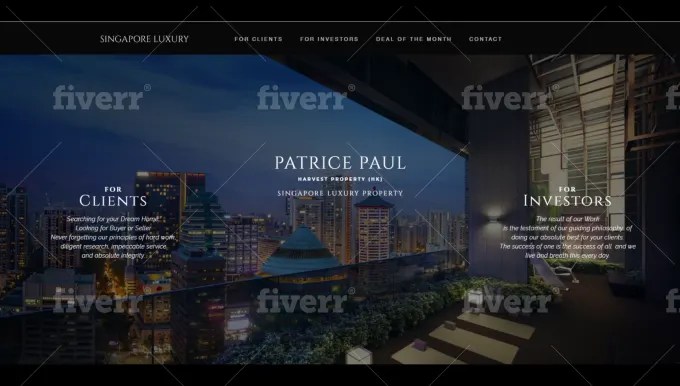
At paperclipcms. com we only focus on real estate websites. We see amount of real estate websites each day. We spend our days investigating, analyzing, promoting, and designing real estate websites. Yet, many of us never get desensitized to the utterly horrible design and also functionality of the majority of real estate websites out there today. It’s often shocking, sometimes tragic and often comical how poorly made most real estate websites are.
The subject of real estate website design wouldn’t fit within the framework of this blog post, however we will suggests some major “musts” for real estate websites.
1 . Coordinate your outbound links and keep links to 3rd party online sites to a minimum on your main page. If you have a real estate link change or resource page, make sure you have organized your back links into categories and only included relevant links. A link coming from a coffee retailer will do more harm than good for the engine ranking and your public image.
2 . Organize your company internal information architecture in such a way that is intuitive and little. Look at your metrics monitoring program to find out what your most in-demand pages are. While most real estate webmasters place a extraordinary amount of attention on their “about us” page, we have identified these pages are frequented by less than 2% involving website visitors. Our testing has shown the most popular pages on real estate property websites have been property listing pages, property index internet pages, maps, blogs and of course the sites main page. People need properties and regional information before they want to know about what their education background is. Make sure you present your website information in the order that correlates to your website visitor preferences.
- Make certain there is design continuity throughout your site. You should have one concept font, size and color, one subtitle font, dimensions and color and the body text should also be the similar site wide. Similarly, ensure there is harmony between the colorings on your site. There should be great thought put into the color blends and the interaction between graphical elements and text aspects. For example , if your banner has predominantly cool, blues along with purples, then bring that into consideration whey dealing with your company’s sites typography choices, such as page titles or subheadings.
some. Upload as many properties as you possibly can. All of our research has concluded a similar findings. People visit real estate websites to search for properties. They desire pictures, virtual tours, directions, descriptions and contact information. Way too many real estate websites keep up a few outdated listings hoping their site visitors will call asking to see a particular place, on which there response will be “I’m sorry, that property is no longer available but maybe you should come by the office and I could show you a list of other properties that are available”. This is such an ineffective way to harness the power of the internet.
The more properties you could have on your site, the longer people will stay on your internet site and look around. The more properties you have on your site, the harder education your site visitors will have regarding your property offerings plus the less work you will need to do in the future informing your consumers of property choices. The web saves both you plus your clients a lot of time. You save time because you now have clients going to you with printouts of the properties they want to see so you spend less time educating your clients. It’s a win win condition, but it requires that you keep your website up to date and booming with many properties.
Again, you don’t have to be the next Zillow. com, and you don’t need to do an IPO to raise money in order to site psd to elementor gets the attention it deserves. While building a good quality real estate website takes time, it’s not something that out of reach to the common real estate professional. It just takes some pre-planning and a basic perception of design and technology.
 Waheat